
Which Is the Best Season to Visit Kumbhalgarh: Monsoon, Winter, or Summer?

What to Look for When Booking a Private Pool Resort in Kumbhalgarh?
July 15, 2026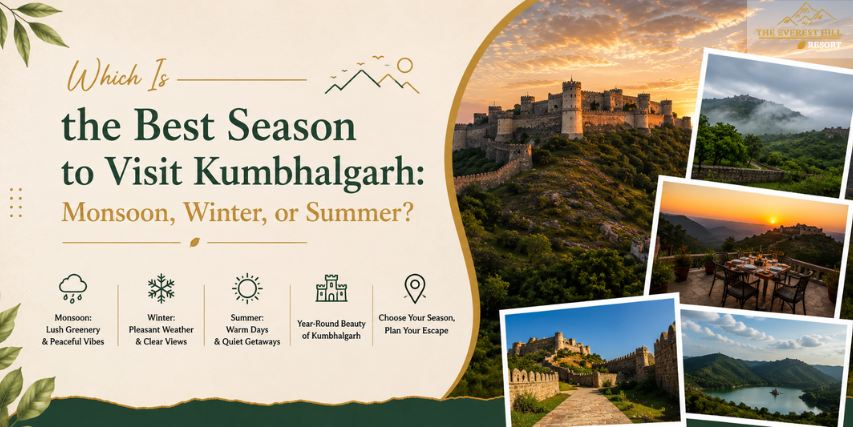
Kumbhalgarh is located on a hill in the Aravalli range, approximately 84 km from Udaipur, and the central fort has overlooked this part of Rajasthan since the 15th century. What changes here is the light, the temperature, and the size of the crowd at the fort gate. The monsoon turns the hills lush green. Winter brings clear weather and long walking hours. Summer empties the trails but tests your tolerance for heat. This guide compares all three seasons so you can match your trip to what actually matters to you, starting with the places to visit in Kumbhalgarh that each season opens up or closes off.
Why the Season Matters When Planning Your Kumbhalgarh Trip
Weather decides more than comfort at Kumbhalgarh. The fort’s walls and hill trails involve walking on stone in direct sun, so temperature and rainfall directly affect how much sightseeing fits into a day. Crowd size shifts by season too: October through February pulls in the bulk of annual visitors, while June attracts a fraction of that footfall. Hotel rates follow the same pattern, rising during peak months and dropping when demand decreases. To find the best time to visit Kumbhalgarh, consider these questions: How much heat can you tolerate? How much do you want the fort to yourself? And how flexible is your travel budget?
Visiting Kumbhalgarh in Monsoon
The monsoon arrives between late June and September, and it transforms the landscape fast. Dry scrub gives way to green slopes within a couple of weeks of the first proper showers. Waterfalls that stay dry for months begin to flow near the wildlife sanctuary, and the air clears enough after a rainfall to highlight the fort walls from far across the valley.
Why Choose Monsoon?
- Hillsides and valleys turn green, a sharp contrast to the dust of the pre-monsoon months
- Post-rain afternoons often stay in the low-to-mid 20s Celsius, cooler than any other season
- Photographers get dramatic cloud cover and layered visibility across the Aravalli ridgeline
- Fort visits on weekdays can mean fewer crowds
Monsoon comes with precautions, too. Stone steps at the fort get slippery, some hill roads near the sanctuary flood during heavy storms, and outdoor plans need a backup for sudden showers.
Winter: The Best Time to Visit Kumbhalgarh
Between October and February, daytime temperatures run between 10°C and 25°C, dropping toward single digits after sunset. That range makes the fort’s 36 km wall trek, the climb to Badal Mahal, and longer routes around the sanctuary comfortable for hours at a stretch.
Why Winter Is the Peak Tourist Season
- Cool mornings and mild afternoons are ideal for long walks without heat fatigue
- Full daylight hours support fort exploration and side trips to nearby viewpoints
- Family groups and couples fill hotel rooms fastest, and Rajasthan’s main festival season, from Diwali through Makar Sankranti, falls within this window
- Ranakpur’s temple sculptures and the fort’s light and sound show are easiest to enjoy without rushing
Winter earns its reputation as the best time to visit Kumbhalgarh mainly through predictability. Rain rarely disrupts plans, and visibility across the hills remains stable from day to day, which is important if you’re planning a multi-stop itinerary in the region.
Visiting Kumbhalgarh in Summer
March through June pushes daytime temperatures past 35°C, occasionally touching 40°C by May, though evenings are cool enough for outdoor dinners. Fort visits work best before 10 am or after 4 pm, before the stone has absorbed a full day of sun.
What to Expect During Summer
- Early mornings and late evenings remain walkable, even when midday isn’t
- Hotel rates drop, and during this period, budget-conscious travelers find the better deals
- Fort ramparts and sanctuary trails see the lowest visitor numbers of the year
- Resort pools, shaded courtyards, and indoor experiences keep you entertained when the sun sits highest
Planning around the heat makes summer workable. Book fort entry for first thing in the morning, keep afternoons for indoor plans, and carry more water.
Matching the Season to Your Travel Style
Rather than ranking monsoon, winter, and summer against each other, it helps to match the season to what you actually want from the trip.
| What matters most to you | Season that fits |
| Green landscapes and photography | Monsoon (July to September) |
| Long walks and consistent weather | Winter (October to February) |
| Affordable hotel rates and peaceful routes | Summer (March to June) |
| Comfortable fort exploration with kids | Winter |
| Flexible plans with a rain backup | Winter |
None of these seasons rules out a good trip. Each one simply changes what a good trip looks like, so treat the checklist above as a starting point rather than a final answer.
Must-Visit Attractions During Every Season
Kumbhalgarh Fort is famous for a perimeter wall that runs close to 36 kms along the ridge, making it one of the longest continuous fortifications in Asia and a reason the site draws visitors in every season. The wildlife sanctuary surrounding the fort stays open year-round and shelters species such as the four-horned antelope and leopard, with sightings more likely during cooler months when animals move at dawn and dusk. Badal Mahal, the palace at the fort’s upper section, gives a clear view across the Aravalli range on days without heavy cloud cover. Ranakpur Jain Temple, about an hour’s drive away, works well as a half-day trip regardless of season since most of it sits under cover. For travelers mapping out places to visit near Kumbhalgarh, these four points cover both the historical and natural sides of the region without requiring a full week.
Where to Stay During Your Kumbhalgarh Vacation
Location matters more than star rating here. Staying within a short drive of the fort reduces travel time for early morning visits, when the light and temperature are more favorable. Look for properties with unobstructed hill views, since the surrounding terrain is part of what makes a stay in Kumbhalgarh worth the trip.
Families need room to spread out and staff who can adjust plans around kids’ schedules, while couples prioritize quiet rooms and private outdoor space. Among the places to stay in Kumbhalgarh, the ones that balance proximity to the fort with genuine hospitality and well-kept grounds hold up across all three seasons, not just the busy winter months.
Conclusion
The monsoon brings green hills and a peaceful fort, but it also requires careful planning. Winter offers the most predictable weather and the greatest variety of activities, which is why it draws the largest crowds. Summer trims the crowds and the hotel rates if you build your day around the heat rather than fighting it.
Whichever season fits your plans, staying somewhere that understands how the region shifts throughout the year makes the difference between a memorable trip and a forgettable one. The Everest Hill Resort & Spa sits within reach of the fort and the sanctuary, in a spot shaped by exactly these seasonal changes.