Kumbhalgarh Sightseeing: Best Places, Timings and One-Day Itinerary

Which Is the Best Hotel Near Kumbhalgarh Fort?
November 13, 2026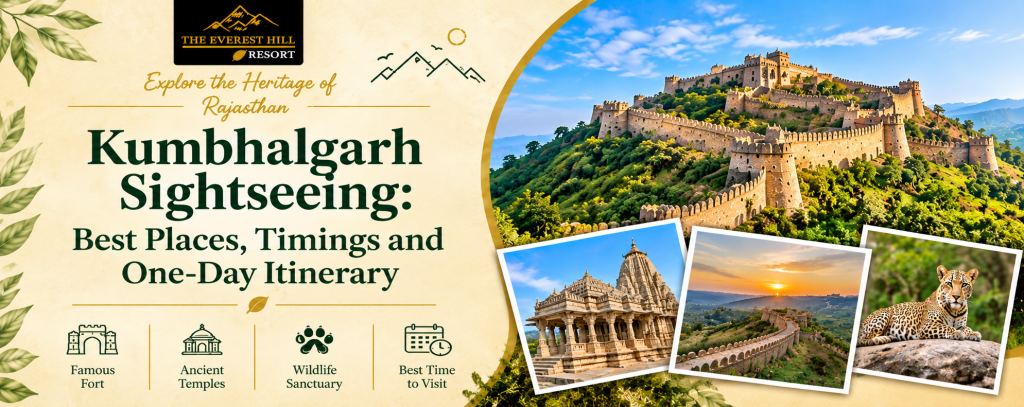
Kumbhalgarh is located on the ridge of the Aravalli range, approximately 85 km north of Udaipur, and has one of the largest hill forts in Rajasthan. Kumbhalgarh sightseeing covers a fifteenth-century fortification, hilltop palaces, working temples and a wildlife sanctuary spread through the surrounding forest. The principal sites accommodate a single well-planned day. Opening hours, safari schedules and road travel times shift with the season, so confirm current details before you set out.
Best Places to Visit During Kumbhalgarh Sightseeing
Four locations account for most of a day: the fort and its uppermost palace, two temples inside the complex, and the sanctuary beyond the walls.
Kumbhalgarh Fort and Badal Mahal
Rana Kumbha built this fort in the fifteenth century, and its perimeter wall runs close to 36 km across the hills. Ram Pol remains the main gateway. Badal Mahal occupies the highest point of the complex, added later by Rana Fateh Singh, and its terraces open onto Aravalli ridges in every direction. The route from the lower gates takes 30 to 40 minutes. Allow two to three hours for the fort itself.
Neelkanth Mahadev Temple and Vedi Temple
Neelkanth Mahadev Temple holds a large Shiva lingam and is located within the fort precinct. Vedi Temple, a three-storeyed octagonal structure near Hanuman Pol, was built as a sacrificial site. Both stand along the fort route, allowing you to take in temple architecture during the climb rather than scheduling separate trips.
Kumbhalgarh Wildlife Sanctuary
The sanctuary stretches across approximately 578 sq km of Aravalli forest and supports populations of leopards, sloth bears, nilgai and wolves. Safari permits, vehicle availability, and gate timings vary throughout the year. Confirm bookings in advance, since slots fill quickly on weekends.
Kumbhalgarh Sightseeing Timings and Best Time to Visit
Sources generally list the fort as open from 9:00 AM to 6:00 PM, seven days a week. Ticket counters and closing times vary, so verify them before travel. The Wildlife Sanctuary has separate hours, with its morning and afternoon safari slots. October to March suits kumbhalgarh sightseeing best, when daytime temperatures stay comfortable for long walks. Late monsoon leaves the hills green and the reservoirs full, though stone paths turn slippery. Summer afternoons are harsh on the exposed ramparts, making an early start essential between April and June.
One-Day Kumbhalgarh Sightseeing Itinerary
- Morning: Enter through Ram Pol around opening time and work through the main gateways, Kumbha Palace and the viewpoints along the inner wall.
- Late Morning: Climb to Badal Mahal, then cover Neelkanth Mahadev Temple and Vedi Temple on the way down.
- Lunch: Break at a restaurant near the fort entrance or back at your resort.
- Afternoon: Pick one of two options, depending on opening hours and travel time: a pre-arranged safari or a nearby temple to visit.
- Evening: Settle in for the view across the Aravallis, or attend the light and sound show if it is operating that day.
Two sites covered properly will serve you better than five rushed ones. Give the fort the hours it needs and consider the rest of the day as flexible.
Tips for Planning Your Kumbhalgarh Sightseeing Trip
- Wear closed walking shoes. Paths are uneven and loose stone is common on the upper sections.
- Carry at least a litre of water per person, plus sun protection and a light layer for the evening.
- Reconfirm opening hours, ticket details and safari availability the day before departure.
- Add 30 to 45 minutes to travel estimates for the winding ghat road.
- Match the plan to the slowest walker in the group rather than the fittest.
Explore Kumbhalgarh Attractions with The Everest Hill Resort
Travellers who want a base within easy reach of the fort can consider The Everest Hill Resort, located close to the main sightseeing circuit. Its Kumbhalgarh attractions page sets out the places and experiences around the property, including local details that help when you are deciding what to include. Reading it while you plan makes it easier to judge which sites deserve priority.
Conclusion
Kumbhalgarh brings together military architecture, temple building and Aravalli forest within a few kilometres of one another. A realistic schedule matters more than a long list of names. Approach kumbhalgarh sightseeing as a fort-led day with one added attraction, and consult The Everest Hill Resort’s attractions page as you settle the details.